

If you own a C5 or C6, you already know the problem. The car still feels right, the cockpit still has that fighter-jet charm, and the factory system still looks exactly like it belongs there. But the second you want to stream music or take a call, you’re suddenly dealing with 2003 again. That’s where a Corvette Bluetooth adapter kit stops being a gadget and starts being the fix.
The catch is that not every Bluetooth solution deserves to live in a Corvette. Plenty of cheap adapters promise easy wireless audio, then give you hiss, weak volume, random disconnects, and a wiring mess hidden behind trim panels. Worse, some solutions push owners toward replacing the factory radio entirely, which is a terrible trade if you care about the interior looking original.
Why Corvette owners are picky – and rightfully so
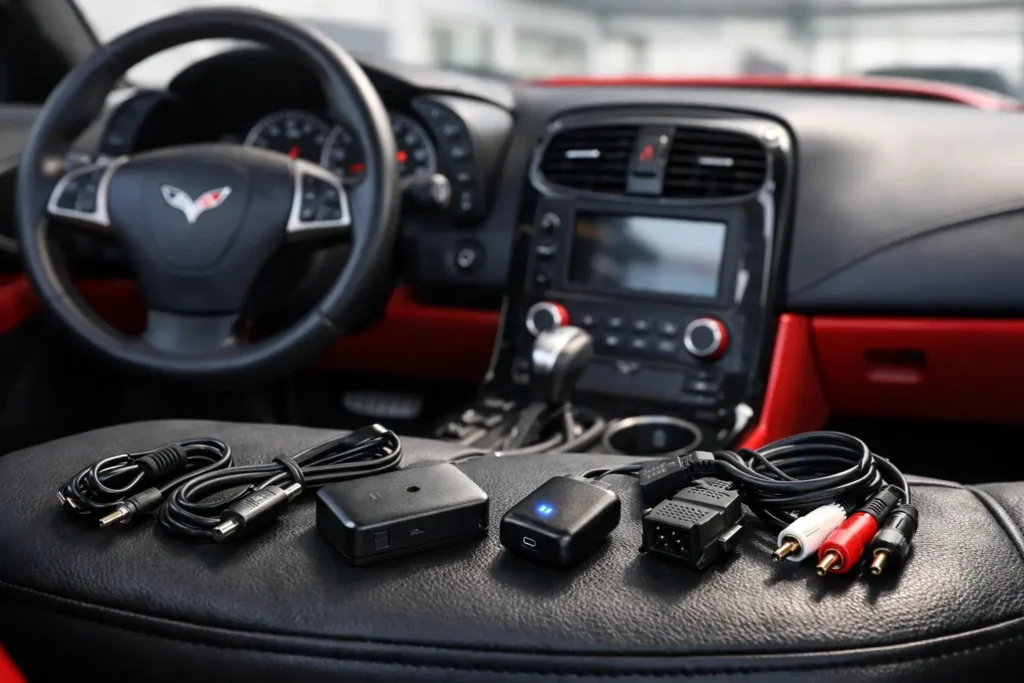
Corvette owners tend to have a low tolerance for nonsense. Fair enough. These cars are not generic commuters, and most owners don’t want a big glowing touchscreen slapped into the dash just to get Spotify and hands-free calling.
That’s especially true for C5 and C6 owners who like the car because it still feels like a Corvette, not a rolling electronics demo. The factory head unit matches the interior. The controls are where they should be. The overall look has aged better than a lot of aftermarket installs ever will. Once you start cutting, splicing, and forcing in universal gear, you usually lose more than you gain.
A good Bluetooth setup should respect the car. It should work with the factory system, preserve the stock appearance, and sound clean enough that you don’t feel like you downgraded the car just to gain convenience.
What a corvette bluetooth adapter kit should actually do
A proper corvette bluetooth adapter kit is not just a way to connect your phone. That’s the bare minimum. The real job is to add modern functionality to the factory audio system without creating new problems.
That means clear audio streaming, stable pairing, and hands-free calling that doesn’t sound like you’re talking through a drive-thru speaker. It also means avoiding the usual garbage that comes with cheap universal options – FM transmitter noise, volume mismatch, signal interference, and laggy controls.
For most Corvette owners, the target is simple. Keep the stock radio. Keep the interior clean. Add Bluetooth in a way that feels intentional, not improvised.
The difference between vehicle-specific kits and universal junk
This is where a lot of owners get burned. They search for a fast solution, buy a universal adapter, and end up spending a Saturday chasing noise, grounding issues, or compatibility weirdness. Universal products are built to fit almost anything, which usually means they fit your car in the loosest possible sense.
A vehicle-specific kit is different. It’s designed around the actual audio architecture of the Corvette, not some broad claim that it works on thousands of vehicles. That matters more than most people realize, especially when you’re dealing with factory premium systems where signal path and integration quality make or break the result.
A well-matched kit tends to install faster, behave better, and sound cleaner because it isn’t forcing your car to work around it. The connection points make sense. The hardware is there for a reason. You don’t end up inventing your own install halfway through.
That’s the whole appeal. Less compromise. Less guesswork. Better outcome.
Corvette Bluetooth adapter kit compatibility matters more than price
A cheap adapter that sort of works is usually more expensive in the long run than the right kit the first time. Not because the price tag is higher, but because the wrong part costs time, patience, and usually another purchase.
Compatibility is the first filter. Year, trim, factory radio type, and whether the car has a premium audio configuration all matter. Some owners assume Bluetooth is Bluetooth and any interface will do the job. It won’t. Older GM audio systems are not all the same, and Corvette applications need to be treated like Corvette applications.
If a product page or seller is vague about exact fitment, that’s your warning sign. If the listing sounds like it was written for every car on earth, keep moving. You want something that speaks directly to your generation of Corvette and factory setup.
Installation should be quick, not a weekend-long regret
Most owners are not looking for another project car task. They want this done, done right, and done without turning the interior into a parts pile. That’s one reason purpose-built kits are such a better fit for enthusiast cars.
A solid kit should install with minimal drama. No cutting up the dash. No weird external modules velcroed in plain sight. No mystery wires you have to hide with sheer optimism. If the installation feels like a hack, it probably is one.
Now, there’s always an it-depends factor. Some owners are comfortable pulling trim and routing a mic cleanly. Others would rather have a shop do it. Both are fine. The point is that the product itself should not create unnecessary complexity. Good design shows up in install time just as much as it does in audio quality.
Sound quality is the whole game
Let’s be blunt. If the audio sounds thin, noisy, or washed out, the rest of the features don’t matter much. Corvette owners notice sound quality, even if they don’t describe it in audiophile language. They know when the system sounds right, and they definitely know when it doesn’t.
This is why FM-based solutions are such a dead end for a car like this. They’re easy to try, sure. They’re also famous for static, hiss, drifting frequencies, and volume that never quite matches the rest of the system. Fine for a rental car. Wrong for a Corvette.
A direct-integration Bluetooth kit gives you a much cleaner result because it’s not broadcasting your music through the air and hoping the radio catches it nicely. You get stronger, more consistent audio and a setup that feels like part of the car instead of a workaround.
Calling features are useful, but not all calling features are equal
A lot of owners come in focused on music streaming, then realize hands-free calling matters more than they expected. Once you’ve used it properly, especially in a car you drive often, it becomes one of those features you don’t want to lose.
That said, call quality depends on more than whether a kit technically supports calls. Microphone placement matters. Noise handling matters. The stability of the Bluetooth connection matters. A system that drops calls, echoes, or makes your voice sound distant is not doing the job.
So yes, calling is a real benefit. But it only counts if the hardware and integration are good enough to make it usable in the real world.
What Corvette owners usually regret
They regret buying the cheapest option first. They regret tearing out a factory radio that matched the car perfectly. They regret trusting generic listings with vague fitment claims. And they definitely regret settling for FM transmitters after hearing the noise floor and interference.
They also regret assuming all Bluetooth kits are basically the same. They are not. Some are built for actual vehicle integration. Others are just accessories with ambitious marketing.
That difference is everything when you care about originality, sound quality, and resale appeal.
Who should buy a corvette bluetooth adapter kit?
If you drive your Corvette regularly and want modern phone connectivity without changing the character of the car, this is for you. If you’ve held off because you didn’t want a tacky aftermarket stereo in the dash, this is exactly the lane to stay in.
It also makes sense if your car is becoming less of a used sports car and more of a keeper. A lot of these Corvettes are already there. Owners are preserving them, cleaning them up, and making smart upgrades that don’t hurt the car’s identity. Bluetooth done right fits that philosophy perfectly.
That’s why companies like Gizmo Guy Gadgets have built a following around this category. Not because owners want more stuff, but because they want one clean fix that respects the car.
The best upgrade is the one you stop thinking about after it’s installed. You get in, your phone connects, your music plays, your calls work, and the dashboard still looks like a Corvette. That’s the whole point.
If your current solution involves static, dangling wires, or a transmitter jammed into the console, you already know it’s time. Buy the fix that matches the car, not the one that just barely fits it.