

If you drive an older BMW and you’re still messing with an FM transmitter, a dangling aux cord, or one of those bargain-bin adapters that sounds like a weak radio station from 2004, you already know the problem. A proper bmw oem bluetooth retrofit is not about adding another gadget. It’s about fixing the car the right way without wrecking what made you buy a BMW in the first place.
That matters more on these cars than people admit. A clean E46, E39, E53, E60, or early E90 with the original interior still intact has a feel to it. The buttons click right. The dash looks finished. The factory audio system was designed to belong there. Rip that out for a flashy touchscreen and sure, you get modern features, but you also lose a piece of the car’s character. For a lot of owners, that’s a bad trade.
What a BMW OEM Bluetooth retrofit should actually do
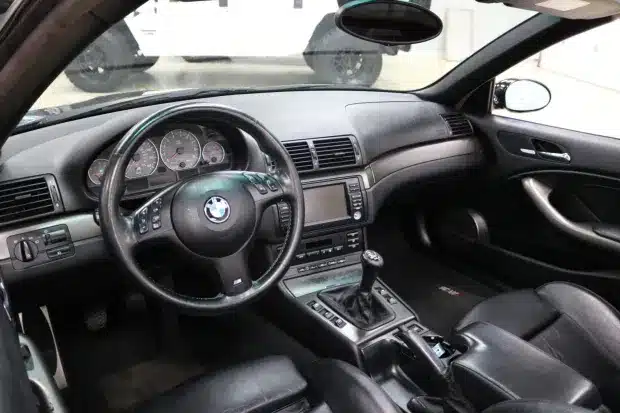
Let’s be honest. A lot of “Bluetooth solutions” for older BMWs are really just workarounds with better packaging. They technically connect your phone, but the experience still feels cheap. You get noise, weak volume, goofy pairing behavior, or controls that only half work.
A real BMW OEM Bluetooth retrofit should feel like the car was supposed to have it. You should get strong, direct audio through the factory system, stable connection, and hands-free calling if your setup supports it. Just as important, you should not have to carve up the dash, replace the radio, or turn the interior into a science project.
That last part is where a lot of owners draw the line. BMW interiors from this era age well when you leave them alone. Once you start stacking universal adapters, visible microphones, random power leads, and aftermarket head units with neon graphics, the cabin stops feeling like a BMW and starts feeling like a compromise.
Why older BMW owners hate universal Bluetooth fixes
Because most of them are lazy solutions.
FM transmitters are the biggest offenders. They are easy, sure. They are also famous for static, hiss, and that washed-out sound that makes even a good factory system seem broken. If your car has premium audio, DSP, navigation, or a fiber optic setup, feeding it a weak wireless signal through the cigarette lighter is just insulting.
Cheap aux-based adapters are a little better, but only if the car already has the right input and only if the adapter itself isn’t junk. Even then, you usually lose integration. Calls can be clumsy. Track control may not exist. Some setups force you to choose between decent music playback and usable phone function.
Then there are full head unit swaps. Sometimes they make sense. If you’re building a track toy, doing a custom interior, or you simply do not care about originality, go for it. But for the owner who wants to preserve the dash, keep the factory screen, and maintain the premium look BMW got right the first time, a head unit replacement is often overkill.
The smart approach to a BMW OEM Bluetooth retrofit
The best retrofit path depends on the car’s factory system, not wishful thinking.
That’s the part people skip. They assume all older BMWs are basically the same, then they order a universal adapter and hope for the best. Bad move. Between model years, navigation versus non-navigation cars, DSP versus standard audio, trunk-mounted modules, and fiber optic systems on later models, BMW changed enough that compatibility matters a lot.
A good retrofit kit is designed around that reality. It plugs into the factory architecture in a way that makes sense for the vehicle, preserves the original controls, and delivers audio quality that actually respects the car’s sound system. That’s the difference between a real solution and a gadget.
For most owners, the target is simple. Keep the stock look. Keep the stock radio. Add wireless audio streaming and calling. Do it fast. Do it clean. No static. No hiss. No weird half-installed mess sitting in the center console.
BMW OEM Bluetooth retrofit and sound quality
This is where people either get religion or waste money twice.
BMW’s premium factory systems, especially in well-optioned cars, still sound surprisingly good when you feed them a proper signal. Not “good for an old car.” Actually good. Balanced, full, and far better than they get credit for. The problem is not always the speakers or amp. A lot of the time, the weak link is the junk source feeding the system.
When owners switch from FM-based Bluetooth to a direct-integration retrofit, the difference is immediate. Music has body again. Vocals stop sounding thin. Bass comes back. Volume is more usable. You stop hearing that layer of radio fuzz that cheap adapters seem to add to everything.
That does not mean every retrofit sounds identical. Some systems are naturally limited by the factory hardware, and some owners expect modern luxury-car processing from a setup designed twenty years ago. Fair enough, but there is a huge difference between respecting the original system’s ceiling and choking it with a bad input method.
Installation should not feel like a punishment
A lot of BMW owners are happy to turn a wrench. They are not looking to spend a Saturday decoding a wiring diagram written by a committee in Munich.
That is why install time matters. If a retrofit requires cutting factory wires, guessing at pinouts, or removing half the interior just to get Bluetooth audio, something has gone sideways. The right kit should be vehicle-specific enough that installation feels direct, not improvised.
In many cases, that means connecting into the existing factory system at the proper module location, routing the microphone cleanly, pairing the phone, and being done. No ugly display stuck on the dash. No hacked trim. No stack of extra parts zip-tied behind the glove box like a confession.
Of course, some cars are tighter than others. Navigation-equipped models and fiber optic systems can add complexity. That’s normal. But complexity is not the same thing as chaos. A well-designed retrofit respects the platform and saves the owner from reinventing the wheel.
When OEM-style is better than aftermarket
Not always. But often.
If your goal is Apple CarPlay on a giant screen with camera inputs, app support, and a full infotainment overhaul, then yes, aftermarket may be the better fit. That is a different project. There is nothing wrong with that if it matches how you use the car.
But if your real goal is more practical – stream music, take calls, preserve the dashboard, and keep the car feeling factory – then OEM-style integration usually wins. It looks right. It feels right. It protects the resale story. And it avoids the weird visual mismatch you get when a modern touchscreen is jammed into a cabin designed around analog-era restraint.
That preservation angle matters more now because these cars are not just used cars anymore. A lot of them are becoming enthusiast keepers. Clean examples are harder to find. Original interiors matter. Buyers notice when a car has been modified with care, and they definitely notice when it has been modified without any.
Who should get a BMW OEM Bluetooth retrofit
If you love the car but hate the tech, you are the target.
This upgrade makes sense for the owner who wants modern phone function without making the cabin look cheaper. It makes sense for the daily driver who is tired of balancing a phone on the console and hearing static on every playlist. It also makes sense for the enthusiast who has spent real money preserving suspension, cooling, trim, paint, and interior details, and does not want to blow the whole vibe with a discount electronics fix.
And yes, it makes sense even if you do not drive the car every day. Weekend cars deserve decent audio too. There is something deeply annoying about a BMW that still feels mechanically sorted but forces you to listen to music like it’s coming through a gas station speaker.
For owners shopping carefully, this is where a specialist matters. A company like Gizmo Guy Gadgets exists for exactly this kind of problem – factory-system cars, model-specific fitment, preservation-first upgrades, and none of the nonsense that comes with one-size-fits-all adapters.
The real question is not whether Bluetooth is worth adding
It is whether you want to add it in a way that still respects the car.
A bad retrofit solves one problem and creates three more. A good one disappears into the ownership experience. You get in, your phone connects, your music sounds right, your calls work, and the dashboard still looks like BMW built it that way. That’s the whole point.
Older BMWs have earned better than cheap workarounds. If you’re going to modernize one, do it with the same mindset you’d use for any other part of the car – the right part, the right fit, and no shortcuts you’ll regret every time you look at the interior.