

If you own a 996, 997, Boxster, Cayman, Cayenne, or early Panamera, you already know the problem. The car still feels right, the interior still looks right, and the factory stereo still belongs there – but your phone lives in 2025 and your radio does not. That is exactly why porsche factory radio bluetooth has become such a big deal for owners who want modern function without wrecking the cabin.
The bad news is that Porsche audio upgrades are full of traps. Cheap FM transmitters sound cheap. Universal aux-to-Bluetooth gadgets add noise, weak volume, and weird connection issues. Full aftermarket head units can fix the tech problem, but they often create a much worse one: a dashboard that suddenly looks like it belongs in the wrong car.
For most Porsche owners, the goal is not to reinvent the interior. The goal is to keep the factory look, keep the factory sound character, and add Bluetooth in a way that feels like it should have been there from day one.
Why Porsche factory radio bluetooth matters more than in other cars
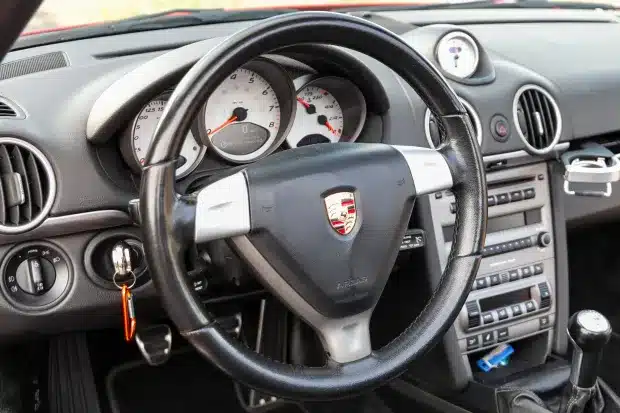
Porsche owners tend to notice details other people ignore. The texture of the switchgear, the shape of the center stack, the amber lighting, the way the cabin feels untouched – it all matters. In a Honda daily driver, swapping a head unit might be no big deal. In a well-kept 911 or Boxster, it can cheapen the whole car in ten minutes.
That is especially true on late 1990s through early 2010s models with premium factory audio. A lot of these systems were designed as complete packages, not just radios with speakers attached. Some use fiber optic architecture, external amps, or tightly integrated controls. Once you start replacing parts blindly, you can end up with compatibility headaches, warning lights, lost functions, or a sound system that technically works but feels hacked together.
That is why the right Bluetooth solution is preservation-first. It should respect the car. It should work with the factory radio instead of trying to overpower it.
The three ways owners usually add Bluetooth
Most Porsche owners end up looking at the same three paths.
The first is the bargain-bin route: FM transmitters, cigarette lighter adapters, and generic Bluetooth receivers. These are attractive because they are cheap and easy. They are also the reason so many owners think Bluetooth in an older Porsche just sounds bad. Static, hiss, fluctuating volume, and random interference are common. If you care at all about sound quality, this route gets old fast.
The second path is a full radio replacement. Sometimes that makes sense, especially if the factory unit is dead or the car is already heavily modified. But if your main goal is simply streaming music and hands-free calling, replacing the dashboard is often overkill. You spend more money, change the interior, and may still need extra modules to retain factory amplifier functions or steering wheel controls.
The third path is what most enthusiasts actually want once they understand it: a vehicle-specific integration kit that adds Bluetooth to the factory system. This approach keeps the original radio in place and feeds clean audio into the system the right way. No fake radio station. No ugly screen. No goofy suction-cup nonsense hanging off the dash.
What good Porsche factory radio bluetooth should actually do
A proper solution is not just “Bluetooth that connects.” That bar is too low.
Good Porsche factory radio bluetooth should give you clean audio streaming with stable volume, reliable pairing, and phone call support if your vehicle and kit support it. It should work with the factory amplifier and speakers without adding hiss or flattening the sound. It should install without cutting up the dashboard or turning the trunk wiring into a science project.
It should also be honest about compatibility, because Porsche PCM systems vary more than people think. Becker, PCM, CDR, MOST fiber optic setups, Bose-equipped cars, non-Bose cars – these details matter. Anyone selling you a so-called universal Porsche fix without asking the right questions is guessing with your money.
That is one place where owners get burned. They buy the first adapter they see, it half-works, then they assume the car is difficult. Usually the car is not the problem. The wrong hardware is.
Porsche systems are not all the same
This is where a lot of articles get lazy, so let’s keep it real. There is no single answer for every Porsche from 1998 to 2012.
A 996 with a basic factory radio is a different conversation than a 997 with PCM and a fiber optic Bose system. A first-gen Cayenne can have its own set of integration quirks. Even within the same generation, trim and audio package can change what works.
That means the best Bluetooth option depends on how your car was built. If the system uses fiber optics, the adapter needs to play nicely with that architecture. If there is an external amplifier, the integration needs to preserve it. If the car has a factory CD changer input path, that may be the cleanest place to inject audio. This is why vehicle-specific kits beat universal adapters every time. They are built around how the car actually works, not how someone hopes it works.
What installation should feel like
Nobody buys an older Porsche because they enjoy tearing apart interior panels for fun. Even if you are handy, you probably want this done quickly and cleanly.
A well-designed kit should install with minimal drama. That means clear connection points, no nonsense wiring, and no permanent dash surgery. In many cases, the whole job is measured in minutes, not a full Saturday. That matters because the best upgrade is the one you do once and then forget about.
It also matters for resale and long-term ownership. Future you, or the next owner, should be able to look at the car and see an original interior, not evidence of a bad electronics phase.
Sound quality is where cheap solutions fall apart
This is the part that separates real integration from junk.
Porsche factory systems were never perfect, but many of them still sound surprisingly good when fed a proper signal. The speakers, amp tuning, and cabin acoustics can absolutely hold up for daily use and road trips. What ruins the experience is low-grade signal delivery. FM transmitters compress the life out of the music. Generic receivers often introduce noise floors, clipping, or weak output. Calls can sound thin or broken.
A direct-integration Bluetooth kit avoids most of that mess because it is not trying to trick the radio through the airwaves. It sends audio through the factory system in a way that preserves more of what your phone is actually outputting. That means stronger clarity, more stable volume, and a setup you will actually want to use every day.
No static. No hiss. That should not be a premium fantasy. It should be the baseline.
When a factory-look solution is the smarter move
There are cases where an aftermarket screen makes sense. If you need CarPlay, backup camera integration, navigation on the dash, and a whole modern infotainment stack, then yes, a replacement head unit may be worth it.
But plenty of Porsche owners do not want all that. They just want Spotify, podcasts, calls, and maybe turn-by-turn audio through the speakers while keeping the original radio and controls. For that owner, a factory-look Bluetooth integration is usually the smarter move. It costs less, looks better, and respects the character of the car.
That is really the heart of it. These cars are old enough to be special, but not so old that you should have to live without basic modern convenience. You do not need to choose between originality and usability anymore.
The best upgrade is the one that disappears
The funny thing about a great Bluetooth install is that it should not feel like an “upgrade project” for very long. After a few drives, it just feels normal. You get in, the phone connects, the music starts, calls come through, and the dashboard still looks like Porsche intended.
That is the sweet spot.
For the right owner, porsche factory radio bluetooth is not about gadgets. It is about keeping an older Porsche enjoyable in real life. You want the flat-six, the steering feel, the cabin design, and the original personality. You also want your phone to work without static-ridden nonsense. Those two things can absolutely coexist if the solution is built for the car instead of forced onto it.
Gizmo Guy Gadgets has built a reputation around that exact idea – preserving the factory system while adding the one feature owners use every single day.
If you are shopping for Bluetooth for an older Porsche, be picky. Ask what system your car has. Ask whether the solution is truly vehicle-specific. Ask whether it keeps the factory radio, factory amp behavior, and factory look intact. That extra five minutes upfront can save you from buying the same upgrade twice.
Your Porsche does not need a plastic dashboard makeover to join the modern world. It just needs the right signal path and a little respect.