

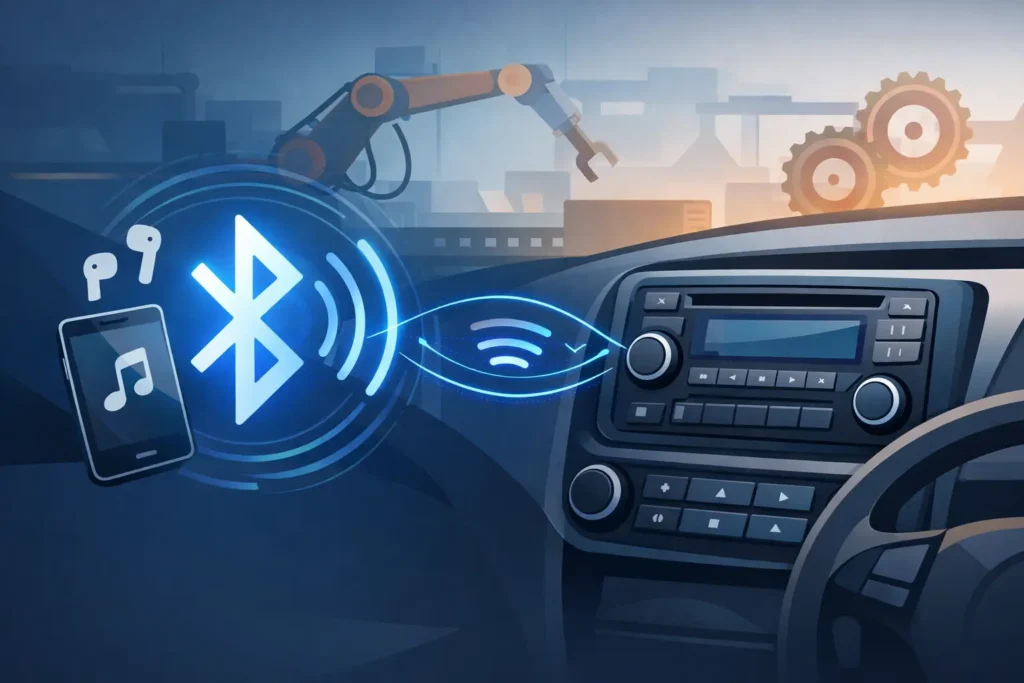
You know the moment. You’re in a clean W211, an LS430, a C5 Corvette, an E46, maybe a 997, and the car still feels right. The doors shut with that solid old-school weight. The factory stereo still sounds better than most bargain aftermarket junk. Then you reach for music or a call, and suddenly your car is stuck in 2004. That’s why bluetooth for factory radio has become such a big deal for owners who want modern function without butchering a perfectly good interior.
The problem is not finding a way to force Bluetooth into an older car. Anybody can do that badly. The real job is adding it without static, without a cheap plastic screen zip-tied somewhere dumb, and without ripping out the dash that made the car feel special in the first place.
Why bluetooth for factory radio matters
If you own an older luxury or enthusiast car, you already know replacement is not always an upgrade. Factory systems in many late 1990s to early 2010s vehicles were tuned for the cabin, integrated with steering wheel controls, and designed to look like they belonged there – because they do.
That matters more than people admit. A lot of owners are not trying to turn a clean Mercedes, Lexus, BMW, Porsche, Audi, or Corvette into a rolling electronics aisle. They want streaming audio and hands-free calling, but they also want the dashboard to stay original. They want the wood trim, the factory screen, the OEM buttons, and the sound character the car came with.
There’s also resale value and pride of ownership. A hacked-up dash with an ill-fitting aftermarket head unit can make an otherwise beautiful car feel cheap. If you bought the car because it had integrity, the audio upgrade should respect that.
The bad options everyone tries first
Most people start with the same three workarounds. FM transmitters come first because they’re cheap and easy. They also sound like FM transmitters. You get hiss, weak bass, random interference, and that lovely moment when a local radio station fights your playlist.
Then there are aux adapters and universal Bluetooth dongles. These can be fine in the right car, but in many factory premium systems they’re clumsy, inconsistent, or missing key features. Some add noise. Some need constant charging. Some give you music but not proper call handling. Some technically work, but feel like a science project every time you start the car.
The third option is a full aftermarket head unit. Sometimes that makes sense in a basic commuter. In a well-kept premium car, it often creates more problems than it solves. You lose the original look, you may lose factory integration, and the install gets expensive fast if the car uses fiber optic audio or a more complex OEM system.
That’s the part many owners learn the hard way. The newer the feature set you want, the more tempting it is to over-modify a car that never needed it.
What a good Bluetooth solution should actually do
A proper bluetooth for factory radio setup should feel boring in the best possible way. You get in, the phone connects, the music plays cleanly, calls come through clearly, and nothing looks out of place.
That means sound quality comes first. If your car already has a premium factory amplifier and speaker package, the Bluetooth source should feed that system cleanly. No radio-band compression. No extra hiss. No weird volume swings.
It should also work with the car instead of fighting it. In many older luxury vehicles, that means using the factory pathways already built into the system rather than bypassing everything with a universal add-on. Good integration preserves what made the audio system good to begin with.
Install matters too. Owners shopping in this category usually do not want to cut trim, splice a mess of wires, or stare at a random controller glued to the console. The best setups are vehicle-specific, quick to install, and easy to reverse if you ever want the car completely stock again.
Factory radio Bluetooth is not one-size-fits-all
This is where generic advice falls apart. Not every car handles Bluetooth integration the same way, and not every factory radio offers the same access points.
A 2001 Mercedes with a fiber optic MOST system is a different animal than a mid-2000s Lexus, and both are different from a C6 Corvette or an early iDrive BMW. Some vehicles need a module that talks to the factory audio network correctly. Some need a direct interface at the radio or media port level. Some have factory phone prep that helps. Some have factory features that only complicate the job.
So if you see a universal product claiming it works on everything from a Porsche Boxster to an S-Class to an Audi A8, be skeptical. That usually means compromise somewhere – audio quality, call quality, ease of install, or reliability.
Vehicle-specific integration wins because it respects the system architecture already in the car. That sounds technical, but the result is simple: better sound, fewer headaches, and a cleaner install.
What owners of older luxury cars usually care about most
It’s not just Bluetooth. It’s what Bluetooth lets them keep.
They want to keep the factory head unit because the dash looks right with it. They want to keep the premium amplifier because it still sounds good. They want to keep steering wheel controls if possible. They want to keep the car feeling like the car, not a half-finished custom project.
That preservation-first mindset is exactly why purpose-built kits exist. For the right vehicle, they let you add modern streaming and calling while leaving the original personality intact. No fake carbon trim kit. No oversized touchscreen. No regret.
And yes, calling matters. A lot of older owners are not chasing every gadget on earth. They just want reliable music streaming and hands-free phone use in a car they already love driving. That’s reasonable. It should not require redesigning the interior.
The trade-offs are real
Let’s be honest about it. There is no single solution that does everything perfectly in every older car.
Some Bluetooth integrations focus mostly on streaming audio. Some do both music and calls. Some retain more factory-style control than others. In certain vehicles, track control or display text may be limited by the original radio itself, not the Bluetooth hardware. In others, installation is truly plug-and-play. In more complex systems, it still may take a little patience.
That does not mean the upgrade is not worth doing. It means good buyers look for the best fit, not fake perfection. If your top priority is clean audio and OEM appearance, that may matter more than seeing song titles on a 20-year-old screen. If hands-free calling is non-negotiable, compatibility needs to be confirmed before you buy.
The smart move is matching the solution to the car and to your priorities.
How to choose bluetooth for factory radio without wasting money
Start with the exact vehicle details: year, model, trim, and audio system type. That last part matters more than most people think. Premium factory systems often vary within the same model range.
Then ask the right questions. Does it support streaming only, or streaming and calls? Does it connect through the factory system directly, or through a lower-quality workaround? Will installation require cutting or visible modifications? Is it designed specifically for your platform, or just claimed to be compatible?
Also pay attention to the language sellers use. If the pitch leans on vague buzzwords and avoids specific vehicle fitment, that’s a warning sign. Real integration products should be clear about what they fit, how they install, and what features you can expect.
This is where enthusiast-focused brands tend to do better than broad electronics sellers. They understand that a 2005 LS430 owner and a 2008 Porsche Cayman owner are not shopping for the same experience, even if both want Bluetooth. Gizmo Guy Gadgets built its reputation around that exact difference.
The upgrade should feel like the car grew into it
That’s the goal. Not flashy. Not overbuilt. Not some giant aftermarket statement piece that ages worse than the original radio ever would.
The best Bluetooth integration for a factory radio feels like something the manufacturer would have offered if they had another model year to get there. You keep the interior design. You keep the sound system. You add the feature that daily driving now demands.
For owners of older luxury and enthusiast cars, that’s the sweet spot. Modern convenience, factory character, no static, no hiss, no nonsense.
If your car is worth keeping, it’s worth upgrading in a way that doesn’t ruin the reason you kept it in the first place.