

- Why Your Classic Mercedes Needs Wireless Audio
- Understanding the Mercedes Challenge
- The FM Transmitter Solution
- What Makes a Premium FM Transmitter Different
- Installation and Setup Process
- Finding the Best FM Frequency
- Preserving Your Classic Interior
- Sound Quality Expectations
- Hands-Free Calling Capabilities
- Compatibility Across Mercedes Models
- Real-World Performance Benefits
- Practical Tips for Best Results
- GizmoGuyGadgets Expertise
- Making the Right Choice
- Moving Forward With Your Upgrade
- Frequently Asked Questions (FAQs)
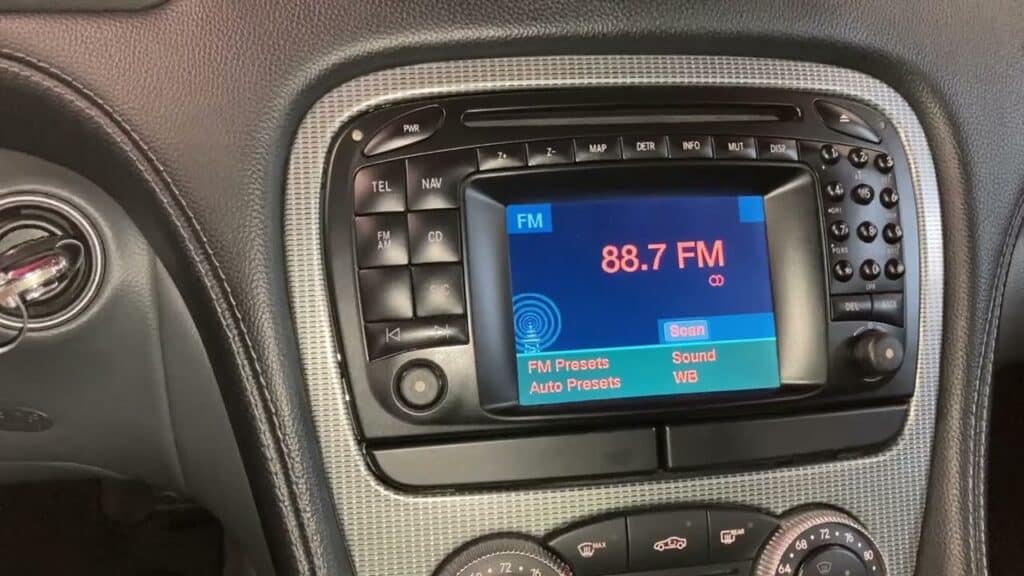
Table of Contents
If you own a vintage Mercedes-Benz, you’ve probably wondered how to add Bluetooth to any classic Mercedes without destroying its timeless interior. Your classic Benz deserves modern wireless convenience, and the good news is that getting there is much simpler than you might think.
Classic Mercedes models are legendary for their solid engineering and refined luxury. However, most of these vehicles came with audio systems that predate wireless streaming technology.
Whether you’re driving a W210 E-Class, W220 S-Class, or W203 C-Class, the lack of wireless connectivity can feel frustrating every time you want to enjoy your favorite playlists or podcasts during your drive.
Why Your Classic Mercedes Needs Wireless Audio
The main reason is simple. You want to stream music, take hands-free calls, and use navigation apps without dealing with tangled cables or outdated media formats. Modern wireless technology transforms your driving experience while keeping your hands on the wheel and your eyes on the road.
Beyond pure convenience, adding wireless capability can actually preserve your vehicle’s value. Smart buyers appreciate classic cars that blend authentic aesthetics with practical modern functionality. Plus, you’ll finally be able to enjoy all your digital content without compromising the elegant factory interior that makes your Mercedes special.
Understanding the Mercedes Challenge
When you decide to add bluetooth to any classic Mercedes, you’ll quickly discover these vehicles present unique obstacles.
Unlike most cars, Mercedes-Benz models from the early 2000s often feature sophisticated COMAND systems that integrate navigation, climate controls, and audio functions into one complex unit. Many also use MOST fiber optic networks, especially those equipped with premium Bose or Harman Kardon sound systems.
These fiber optic systems transmit audio as light signals rather than electrical impulses, making them immune to interference but completely incompatible with standard adapters. The absence of auxiliary inputs on most factory radios means you can’t simply plug in a standard device. This is why many Mercedes owners feel stuck with their outdated audio systems.
The FM Transmitter Solution
The fastest way to add bluetooth to any classic Mercedes is through a quality FM transmitter. These devices plug into your power outlet and broadcast your phone’s audio to your factory radio through FM frequencies.
While basic FM transmitters from big box stores often produce disappointing results with static and interference, premium versions use advanced technology to deliver surprisingly clear sound.
Quality FM transmitters work by converting your digital audio into an FM signal that your existing radio receives. The key difference between budget and premium options lies in the signal strength, noise filtering, and frequency stability. Better transmitters include power filters that eliminate alternator whine and other electrical interference that plague cheaper versions.
The beauty of this approach is its simplicity. You plug the transmitter into your cigarette lighter, pair your phone, tune to an empty FM frequency, and you’re streaming music within seconds. No installation required, no tools needed, and completely reversible if you ever want to return to stock.
What Makes a Premium FM Transmitter Different
When you add bluetooth to any classic Mercedes using an FM transmitter, sound quality depends heavily on the transmitter’s engineering. Premium units include several critical features that budget versions lack.
Advanced noise cancellation technology actively filters out interference from your vehicle’s electrical system. This prevents that annoying buzzing sound that often accompanies cheap transmitters.
Modern premium transmitters also use the latest wireless standards, typically version 5.0 or higher, which provide more stable connections with better range and lower latency. This means your audio stays synchronized with video if you’re watching content, and connection drops become rare even in areas with heavy radio traffic.
Power delivery matters too. Quality transmitters include fast charging capabilities, often with USB-C ports that can deliver 20 watts or more. This lets you keep your phone charged while streaming without adding extra cables or adapters to your interior.
The best units also feature compact, elegant designs that blend naturally with luxury interiors rather than looking like cheap aftermarket additions.
Installation and Setup Process
The process to add bluetooth to any classic Mercedes with a premium FM transmitter takes just minutes. Start by plugging the transmitter into your power outlet, then turn on your vehicle’s accessory power. The transmitter will light up and enter pairing mode automatically on first use.
Open your phone’s wireless settings and look for the transmitter’s name in the available devices list. Tap to connect, and the pairing completes within seconds. Now tune your Mercedes radio to an unused FM frequency, typically something like 87.9 or 88.1 works well in most areas. Set the transmitter to broadcast on the same frequency using its controls.
Once everything is synced, audio from your phone plays through your factory speakers. Most quality transmitters remember your phone and frequency settings, so future connections happen automatically when you start your car. You can control playback from your phone or using basic controls on the transmitter itself.
Finding the Best FM Frequency
Getting optimal sound when you add bluetooth to any classic Mercedes requires finding a clear FM frequency in your area. Urban environments with many radio stations need more frequency experimentation than rural areas. Start with the lowest frequencies like 87.9, as these are typically less crowded in most regions.
If you hear static or breakthrough from actual radio stations, try moving up in small increments. Test 88.1, 88.3, 88.5, and so on until you find a frequency that delivers clean audio. Some premium transmitters let you save multiple frequency presets, which helps if you regularly drive through different areas with varying radio landscapes.
Keep in mind that even the best FM transmitters can encounter occasional interference in densely populated areas. The wireless signal itself remains perfect, but the FM broadcast portion may pick up competing signals. Having a few backup frequencies programmed helps you quickly switch if needed during drives.
Preserving Your Classic Interior
One concern many owners have when they add bluetooth to any classic Mercedes is maintaining the vehicle’s authentic appearance. Premium FM transmitters address this through thoughtful design. The best units feature sleek metal construction and elegant rotary controls that complement luxury interiors rather than cheapening them.
Quality transmitters also stay compact, tucking discreetly into your power outlet area without dominating your center console. Some models include flexible gooseneck designs that let you angle the unit away from sight lines. The result is modern functionality that respects your Mercedes’ classic aesthetic.
Cable management matters too. Premium transmitters with built-in charging ports eliminate the need for separate car chargers, reducing cable clutter. When you do need to charge your phone, a single clean USB-C cable is all that’s visible. This minimal approach maintains the refined look that attracted you to your classic Mercedes in the first place.
Sound Quality Expectations
When you add bluetooth to any classic Mercedes using a quality FM transmitter, you can expect remarkably clear audio that rivals factory systems. Premium transmitters use advanced signal processing to maintain high fidelity during wireless transmission and FM broadcasting. The result often surprises first-time users who expected typical FM static and compression.
The secret lies in multiple stages of noise reduction. First, the wireless connection itself uses modern codecs that preserve audio detail during transmission from your phone.
Next, internal power filtering removes electrical interference from your vehicle’s charging system. Finally, optimized FM broadcasting with strong signal strength minimizes the typical drawbacks of radio transmission.
Your factory speakers and amplifier play crucial roles too. Classic Mercedes models, especially those with Bose systems, feature excellent audio components that shine when fed clean signals. A quality transmitter simply acts as a bridge, connecting your phone’s digital library to these premium factory speakers without degrading the signal along the way.
Hands-Free Calling Capabilities
Modern premium transmitters make it easy to add bluetooth to any classic Mercedes while gaining excellent hands-free calling. Built-in microphones with noise cancellation technology ensure callers hear you clearly even at highway speeds. The microphone typically mounts near your sun visor or clips to your steering column for optimal voice pickup.
Call management works seamlessly through your phone or the transmitter’s controls. When a call comes in, your music automatically pauses and the call routes through your speakers. You can answer, reject, or end calls with simple button presses. Voice quality often exceeds basic car kits thanks to advanced echo cancellation and dual microphone arrays in premium models.
This hands-free capability isn’t just convenient, it’s increasingly necessary. Many regions now enforce strict laws against handheld phone use while driving. Being able to take calls safely through your factory speakers keeps you legal and focused on the road.
Business professionals especially appreciate being able to handle important calls during their commute without pulling over.
Compatibility Across Mercedes Models
The beauty of using quality FM transmitters to add bluetooth to any classic Mercedes is universal compatibility. Whether you own a W210 E-Class from the late 1990s, a W220 S-Class from the early 2000s, or a W211 E-Class from the mid-2000s, the approach works identically. Any Mercedes with a working FM radio and power outlet can benefit.
This compatibility extends to different sound systems too. Factory base systems, premium Bose upgrades, and Harman Kardon packages all receive the FM signal the same way. The transmitter doesn’t need to interact with your audio system’s complex wiring or fiber optic networks. It simply broadcasts a signal that your existing radio receives like any other station.
Even COMAND-equipped vehicles work perfectly. Despite their sophisticated integration of navigation and audio functions, COMAND units still include standard FM receivers. The transmitter sends its signal just like a radio station would, bypassing all the complexity that makes direct audio integration so challenging on these vehicles.
Real-World Performance Benefits
Once you add bluetooth to any classic Mercedes, the daily improvements become immediately obvious. Your morning commute transforms as you access your full music library instead of scanning through random radio stations.
Podcasts and audiobooks make long drives more enjoyable and productive. GPS directions play through your speakers clearly, eliminating the need to constantly glance at your phone screen.
Road trips become infinitely better too. Instead of burning CDs or fumbling with cassette adapters, you simply stream your travel playlists. Passengers can share music from their phones as well, making collaborative playlists a reality. Audio quality stays consistent whether you’re listening to streaming services, downloaded files, or even YouTube videos.
The convenience factor can’t be overstated. Your phone pairs automatically when you start your car, your music resumes where it left off, and everything just works. No more carrying media, no more cable tangles, no more outdated technology frustrations. Your classic Mercedes finally behaves like a modern vehicle while maintaining its timeless character.
Practical Tips for Best Results
Getting optimal performance when you add bluetooth to any classic Mercedes involves a few smart practices. Always fully charge your transmitter before first use if it includes a battery. Position the unit where it won’t interfere with gear shifting or other controls. Keep your phone within reasonable range, typically within the cabin, for most reliable connection.
Audio quality improves when your phone’s volume is set properly. Too low and the transmitter amplifies background noise. Too high and you risk distortion. Start with your phone at about 80 percent volume and adjust from there. The transmitter’s volume control or your radio’s volume handle final output levels.
Regular firmware updates, when available, can improve performance and add features. Check the manufacturer’s website occasionally for updates. Keep the transmitter’s charging ports clean by gently removing dust with compressed air. These simple maintenance tips ensure years of reliable performance.
GizmoGuyGadgets Expertise
For Mercedes owners specifically seeking bluetooth solutions, GizmoGuyGadgets has developed a reputation for understanding the unique challenges these vehicles present. Their experience with Mercedes COMAND systems, MOST fiber optic networks, and premium sound systems means their products are engineered with these specific applications in mind.
The team understands that Mercedes owners want more than just functionality. They want solutions that respect their vehicle’s luxury character while delivering genuinely excellent performance. This philosophy drives the development of transmitters that combine superior sound quality with elegant design and reliable operation.
Making the Right Choice
When you’re ready to add bluetooth to any classic Mercedes, focus on quality over price. Budget transmitters might save money initially but often disappoint with poor sound and unreliable connections. Premium options cost more upfront but deliver vastly better experiences that you’ll appreciate every single drive.
Look for transmitters with strong user reviews from other Mercedes owners. Pay attention to comments about sound quality, reliability, and customer support. The best manufacturers stand behind their products with responsive service and solid warranties. These indicators separate professional-grade products from cheap imitations.
Consider your specific usage patterns too. If you spend hours daily in your car, invest in the best possible unit. If you drive occasionally, mid-range options might suffice. Either way, prioritize noise cancellation, latest wireless standards, and quality construction in metal rather than plastic.
Moving Forward With Your Upgrade
Your classic Mercedes represents an era when cars were built to last, designed with care, and engineered for enjoyment. These qualities deserve to be enhanced rather than compromised. Modern wireless audio brings your vintage Mercedes into the present without sacrificing anything that makes it special.
The decision to add bluetooth to any classic Mercedes is really about maximizing your enjoyment of a vehicle you already love. Whether you’re commuting to work, running errands, or cruising on weekends, wireless streaming transforms every drive into a better experience. Your carefully curated playlists, favorite podcasts, and navigation apps all become instantly accessible through your factory audio system.
Take the step to modernize your Mercedes wireless capabilities today. You’ll immediately wonder why you waited so long to add bluetooth to any classic Mercedes that brings it all together.
Frequently Asked Questions (FAQs)
1. Will Adding Wireless Audio Damage My Classic Mercedes?
No, quality FM transmitters are completely non-invasive and pose zero risk to your vehicle. They simply plug into your existing power outlet and broadcast an FM signal to your factory radio. Nothing gets modified, cut, or altered in any way. You can remove the transmitter at any time and your Mercedes returns to completely stock condition.
Thousands of Mercedes owners use these devices daily without any issues. As long as you choose a quality unit with proper power filtering, your vehicle’s electrical system remains completely safe.
2. How Is a Premium FM Transmitter Better Than Cheap Ones?
The difference comes down to engineering quality. Premium transmitters include advanced noise cancellation technology that eliminates the static and buzzing that plague budget models. They use stronger FM signals with better frequency stability, preventing interference from nearby radio stations.
Quality units also feature superior wireless chipsets for more stable phone connections. The construction quality matters too, with metal housings and precise controls versus flimsy plastic parts.
Premium transmitters also include fast charging capabilities and thoughtful design that complements luxury interiors. The investment in a quality unit pays off immediately in dramatically better sound and reliability.
3. Can I Use This With My Mercedes Bose Sound System?
Absolutely. FM transmitters work perfectly with all Mercedes sound systems including base factory setups, Bose premium systems, and Harman Kardon packages. Your sound system simply receives the FM signal exactly like it would from any radio station.
The transmitter doesn’t need to interact with your audio system’s internal wiring or fiber optic networks. Whether you have a standard radio or a sophisticated COMAND system, the FM approach delivers wireless audio without compatibility concerns.
In fact, premium sound systems often make the quality difference even more noticeable since excellent speakers reveal how clean the signal really is.
4. What About Static in Areas With Many Radio Stations?
Quality FM transmitters minimize static through strong signal output and advanced broadcasting technology. In crowded radio markets, you might need to experiment with different frequencies to find the clearest channels.
Most areas have several open frequencies available, typically at the low end of the FM band around 87.9 to 88.5. Premium transmitters let you easily switch between multiple saved frequencies if needed during drives through different areas.
The wireless connection itself never causes static, only potential FM interference in heavily saturated markets. Even in major cities, users consistently find clear frequencies that deliver excellent audio quality.
5. Do I Need Any Technical Skills or Tools to Use It?
Not at all. These devices are genuinely plug-and-play, requiring no tools, no installation, and no technical knowledge. You simply plug the transmitter into your power outlet, pair your phone through standard wireless settings, and tune your radio to match the transmitter’s frequency. The entire process takes less than two minutes.
If you can pair wireless headphones to your phone, you can set up a premium FM transmitter. No wiring, no disassembly, no complexity. This makes FM transmitters perfect for anyone who wants modern convenience without dealing with complicated installations or modifications to their classic Mercedes.